About the Centre
The University of Tartu Centre for Climate Research investigates climate and atmospheric processes and aims to understand their impacts on the environment and society.
We combine research, practical applications, and education to provide reliable and up-to-date information for decision-makers, businesses, and society as a whole.
Our work integrates atmospheric and climate science, remote sensing and modeling, education, and societal impact – with the aim of supporting science-based decisions and a sustainable future.
Our Vision
Our vision is to be a trusted and influential climate science center that supports society in adapting to climate change and mitigating its impacts. We aim to contribute to the growth of climate awareness in Estonia and the Baltic Sea region, and to serve as a bridge between science, education, and decision-makers.
Our Mission
Our mission is to foster a deep, science-based understanding of climate and atmospheric processes and their impact on the environment and society. Toetame teadlike otsuste tegemist, jagades usaldusväärseid teadmisi kliimamuutuste põhjuste, mõjude ja võimalike lahenduste kohta. Teeme koostööd teadlaste, õpetajate, otsustajate ja ettevõtetega, et tugevdada kliimateadlikkust ning toetada kohanemist muutuva keskkonnaga – Eestis ja laiemalt Läänemere piirkonnas.
Our Values
Science-based Approach – Our work is founded on internationally recognized scientific research, data accuracy, and critical thinking.
Knowledge Sharing – We bring science-based knowledge to schools, media, and decision-making processes to support the growth of climate awareness throughout society.
Collaboration – We value cooperation with researchers, educators, decision-makers, and other societal groups.
Reliability – We share clear and up-to-date climate information that aids in making informed decisions.
Sustainability – We support environmentally friendly and responsible development directions.
Our Vision
Our vision is to be a trusted and influential climate science center that supports society in adapting to climate change and mitigating its impacts. We aim to contribute to the growth of climate awareness in Estonia and the Baltic Sea region, and to serve as a bridge between science, education, and decision-makers.
Our Mission
Our mission is to foster a deep, science-based understanding of climate and atmospheric processes and their impact on the environment and society. We support informed decision-making by sharing reliable knowledge about the causes, impacts, and potential solutions for climate change. We collaborate with researchers, educators, decision-makers, and businesses to strengthen climate awareness and support adaptation to a changing environment – in Estonia and the wider Baltic Sea region.
Our Values
Science-based Approach – Our work is founded on internationally recognized scientific research, data accuracy, and critical thinking.
Knowledge Sharing – We bring science-based knowledge to schools, media, and decision-making processes to support the growth of climate awareness throughout society.
Collaboration – We value cooperation with researchers, educators, decision-makers, and other societal groups.
Reliability – We share clear and up-to-date climate information that aids in making informed decisions.
Sustainability – We support environmentally friendly and responsible development directions.
Contact the Team
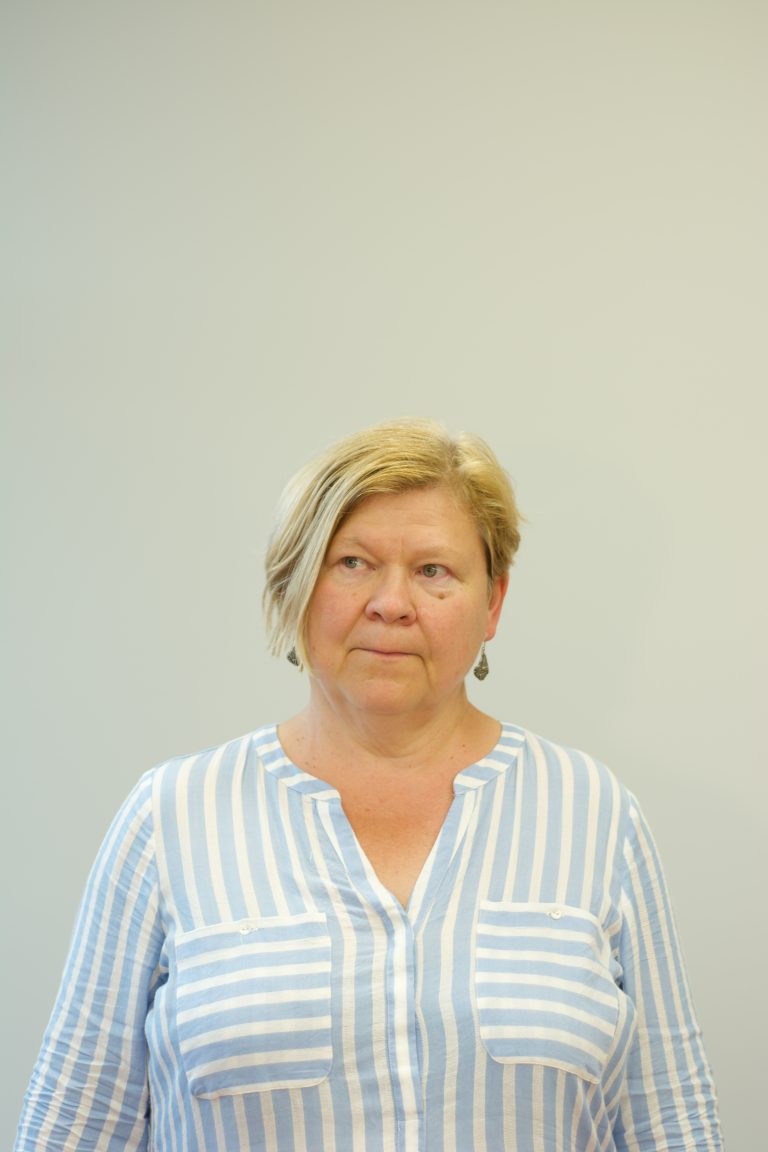
Piia Post
PhD (Geophysics), Head of Laboratory, Professor of Climate Sciences
piia.post@ut.ee
+372 7375551 (521 6807)
Room D401

Velle Toll
PhD (Physics), Associate Professor of Climate Physics
VELLE.TOLL@UT.EE
+372 53951001
ROOM A408

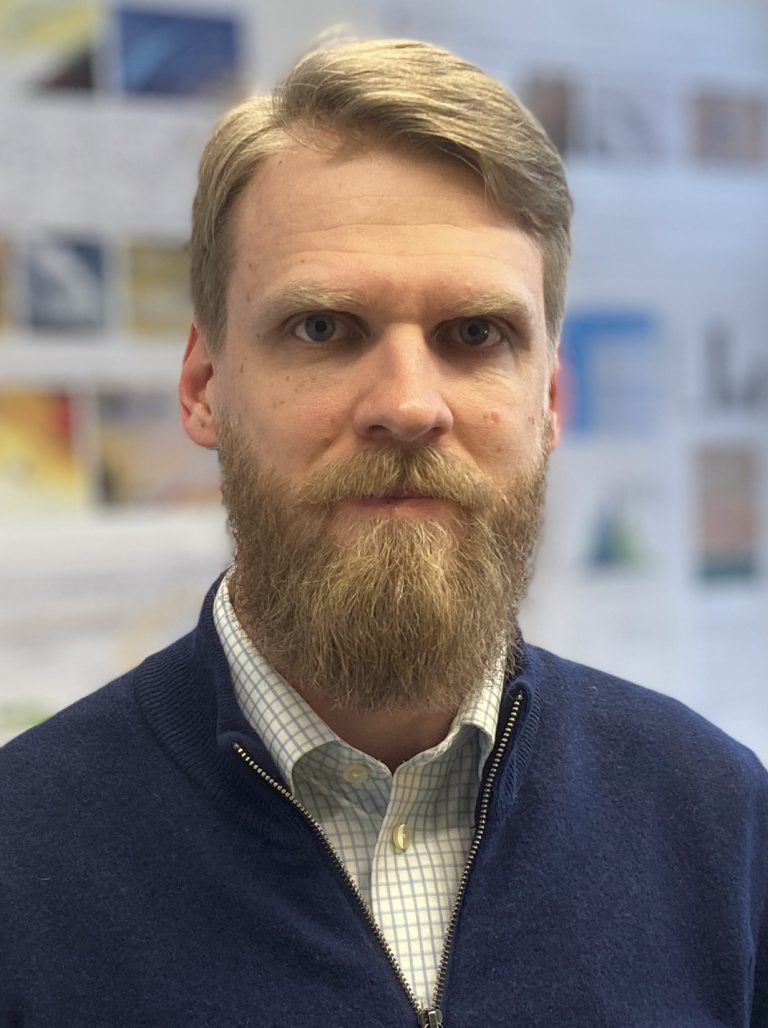
Marko Kaasik
PhD (Environmental Physics), Associate Professor of Air Pollution Modeling (0.5 FTE)
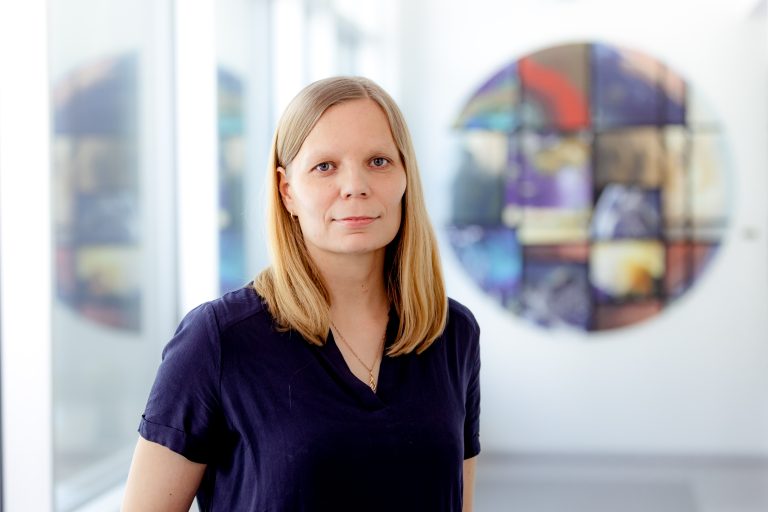
Margit Aun
PhD (Environmental Technology), Research Fellow in Atmospheric Remote Sensing (0.8 FTE)

Kristel Uiboupin
MA (Physics Education), Project Manager 0.2 FTE

Heido Trofimov
PhD (Physics), Research Fellow in Climate Physics (0.2 FTE)


Tanel Voormansik
PhD (Environmental Technology), Research Fellow in Radar Remote Sensing 0.3 FTE
Mait Sepp
PhD (Physical Geography), Research Fellow in Physical Geography (0.2 FTE)
MAIT.SEPP@UT.EE
+372 5293735
ROOM A406


Tiia Pedusaar
PhD (Civil and Environmental Engineering), Hydrologist (0.2 FTE)
TIIA.PEDUSAAR@UT.EE
+372 5097744
ROOM A406

Hanno Ohvril
Cand.Sc. (Physics and Mathematics), Associate Professor Emeritus

Read about us in the media
"Climate Scientist ⟩ The peculiarity of Estonia's climate is its very high variability July 31, 2025
Professor Piia Post of the University of Tartu’s Climate Sciences explains why this summer’s coolness and abundant rainfall are nothing extraordinary.
Professor Piia Post emphasizes that although this summer may seem particularly cold and rainy to many, it actually falls within the range of an average Estonian summer based on previous measurements. People’s weather memory is selective and tends to forget earlier cool years. Post explains that Estonia’s climate is characterized by high variability, and our weather strongly depends on where air masses currently originate. This summer’s distinctiveness is primarily due to the large amount of precipitation, especially in Southern Estonia.
Piia Post ⟩ High electricity prices cannot be blamed solely on calm winds March 1, 2025
Piia Post: High electricity prices are linked to both weather conditions and shortcomings in energy development
Professor Piia Post of the University of Tartu’s Climate Sciences explains that this February has been unusually calm, which is one reason why electricity prices have risen – even doubling compared to the previous year. Winter months are typically the windiest, but this year has seen a prolonged anticyclonic period, leading to low wind energy production. Such calm conditions are part of the atmosphere’s natural variability and largely depend on the direction from which air masses are currently arriving in Estonia.
Velle Toll ⟩ We have become a strongly dominant force in climate change January 13, 2025
Velle Toll, Associate Professor of Climate Physics at the University of Tartu, emphasized in an interview with ‘Vikerhommik’ that at least 90% of global warming since the second half of the 20th century is anthropogenic. According to him, the measurement results are unambiguous, and challenging a science-based worldview without evidence is not justified. The year 2024 was the warmest in recorded history, and for the first time, the global average temperature exceeded the 1.5 °C threshold compared to pre-industrial levels. Although El Niño played a role in this, the temperature increase began even before its onset. Toll noted that warming in Estonia is faster than the global average, but our geographical location offers some mitigation against the impacts of climate change.
Velle Toll: Addressing the climate change problem requires societal and economic change. November 26, 2024
Velle Toll: Climate change is an existential threat and requires science-based and collaborative action.
Tartu Ülikooli kliimafüüsika kaasprofessor Velle Toll esines Riigikogus olulise tähtsusega riikliku küsimuse arutelul, kus tutvustas kliimamuutuste teaduslikku tausta, mõjusid ja võimalikke lahendusi. Toll emphasized that climate change is an existential threat to humanity—a vast amount of energy has already entered the climate system, causing extreme weather, economic damage, and suffering.
Friday Interview: Merilin Pärli and Piia Post, October 18, 2024
Recently, extreme weather conditions have become more frequent in many parts of the world, including Estonia. Can every storm or heatwave be interpreted as a shift towards atmospheric overheating, or where is the line drawn between variable weather and climate change?
How much of the news about climate change is a real threat and how much is exaggerated fear? And what can still be done to mitigate these changes and adapt to them? Sellest kõigest räägitakse faktipõhiselt räägitakse kliimateadlase Piia Postiga.
Velle Toll ⟩ The next act of climate change will be even harsher
Climate change is already here and intensifying rapidly, which is why there is a need for continuously updated science-based analysis of changes in climate conditions, their impacts and vulnerabilities, as well as a management structure and sufficient funding to implement adaptation measures, writes Velle Toll, Associate Professor of Climate Physics at the University of Tartu.
Listening recommendation on Vikerraadio ⟩ From another perspective. Ulrike Plath and Velle Toll
Last year was the warmest in recorded history. Moreover, Europe is the fastest-warming continent. We are increasingly facing droughts, floods, torrential rains, and extreme temperature fluctuations.
At the same time, colorful weather events are also known from Estonian history. What storms and winds battered us during the farm era? How were droughts and crop failures managed decades ago? When did we start worrying about the climate? How could lessons from history help us prepare for the future?”