Enhancing climate resilience to urban flooding using integrated information
Principal investigator: Piia Post
Funding: 150,000 EUR
Funder: Estonian Research Council (ETAg) 95%, European Commission 5%
Project ETIS link
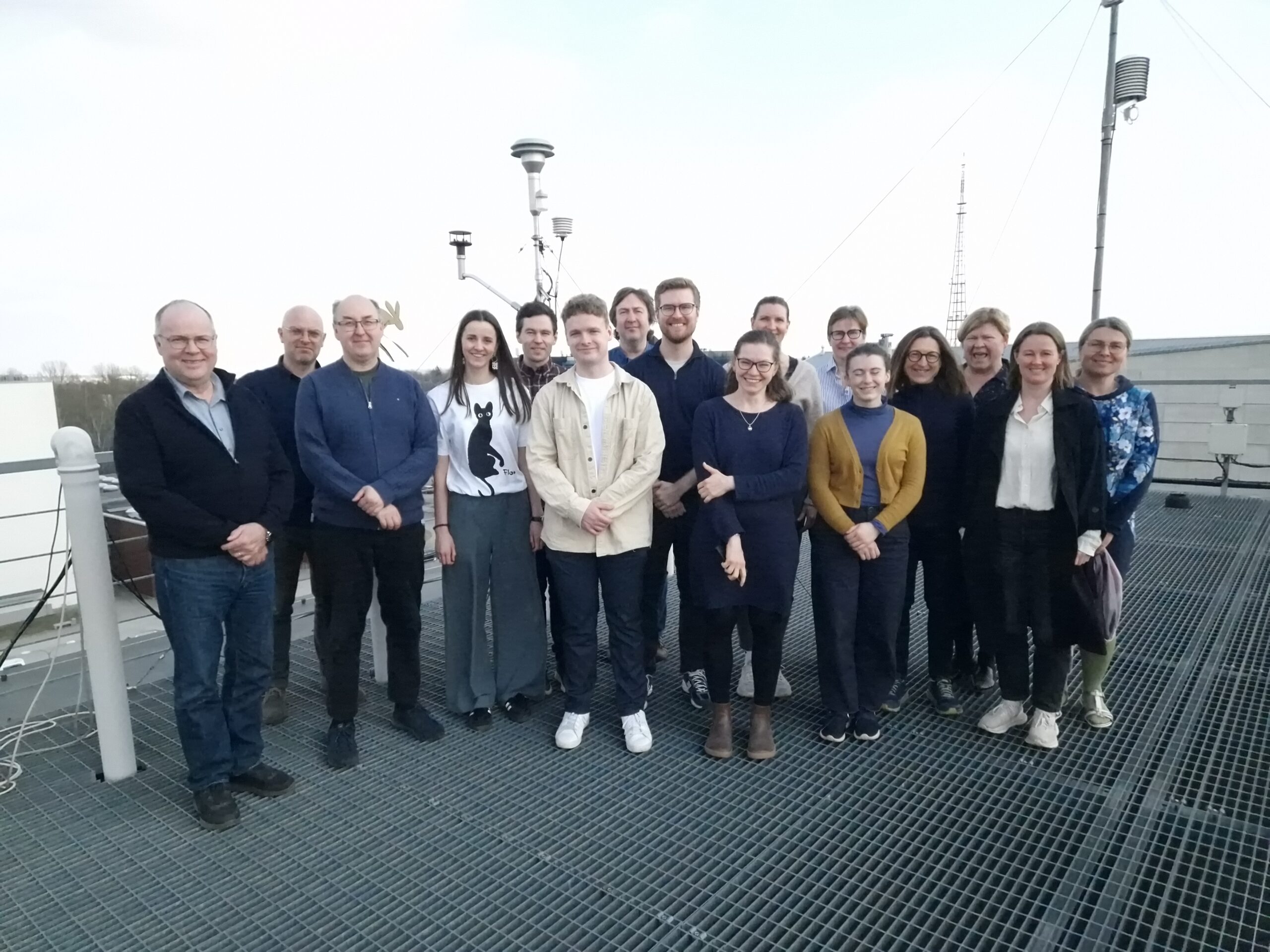
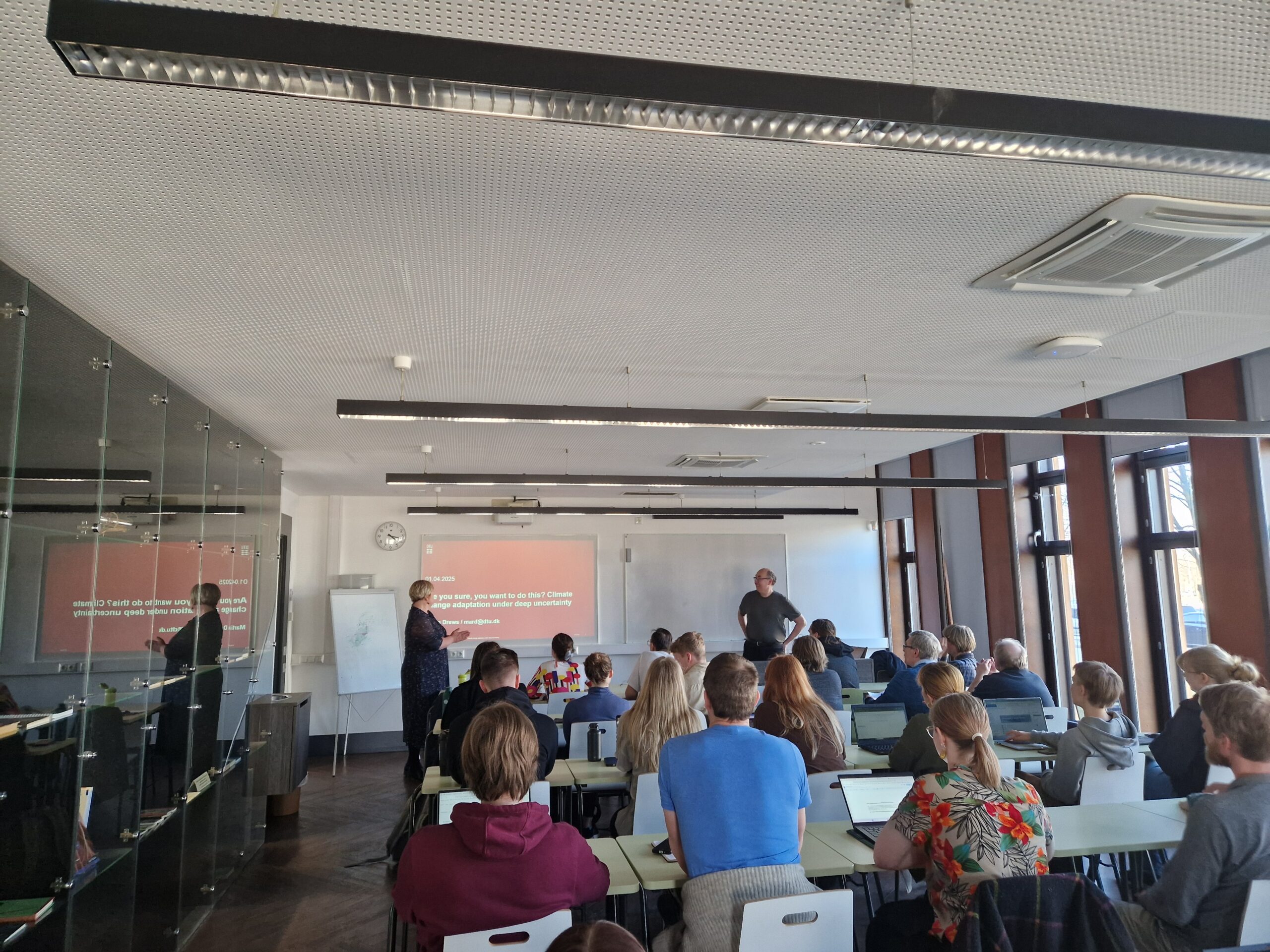
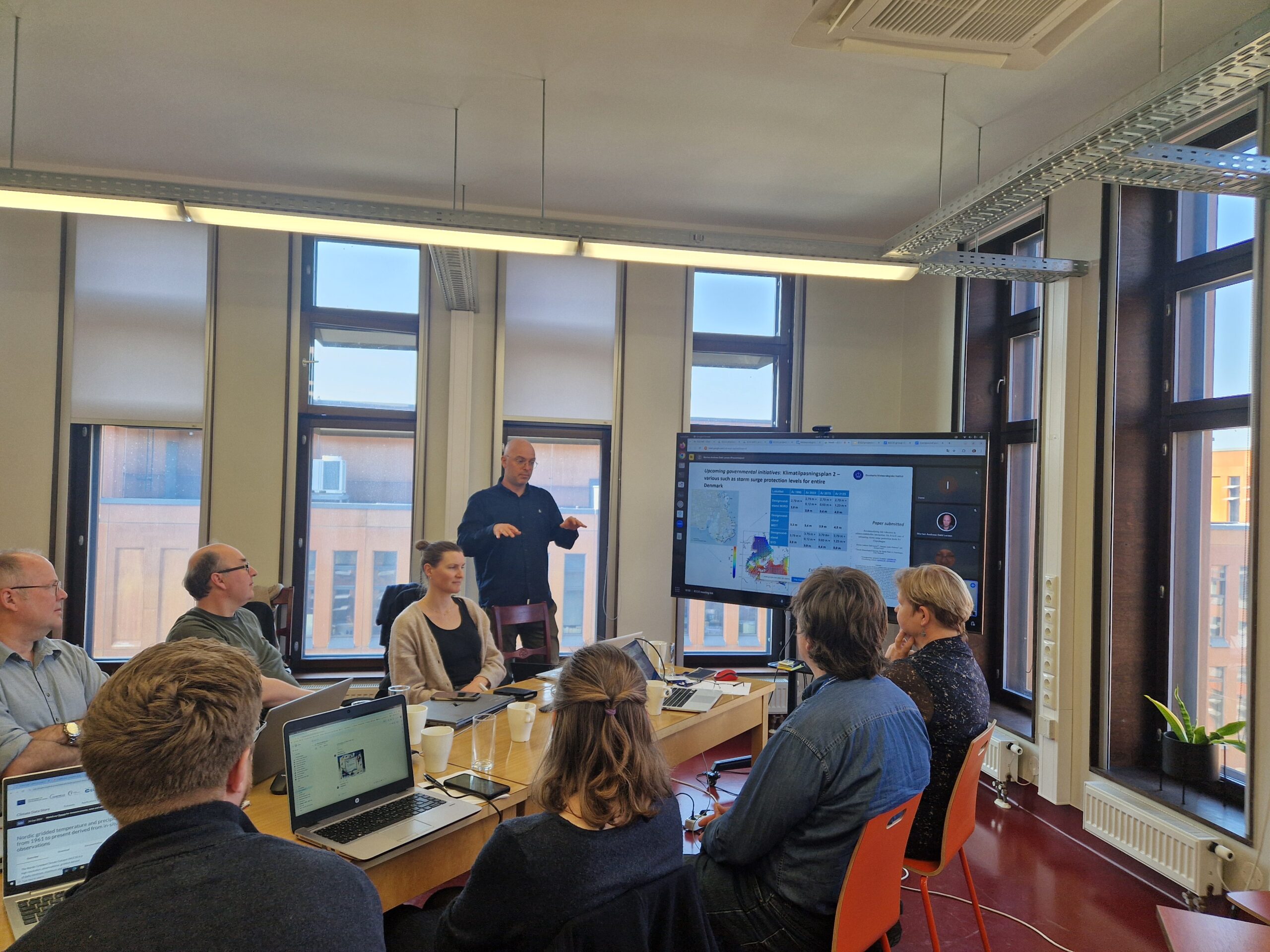
ECCO is a project under the Water4All partnership programme, with the following partners:
- Norwegian Meteorological Institute (lead partner)
- Technical University of Denmark
- Danish Meteorological Institute
- Norwegian Water Resources and Energy Directorate
- Local Government Denmark (Kommunernes Landsforening)
- University of Tartu
- Latvian Environment, Geology and Meteorology Centre

Research Questions
The project focuses on the following research questions:
How can we provide reliable values for extreme precipitation intensity-duration-frequency (IDF) in every point of the Baltic Sea region, and how can this information be made accessible to users?
IDF (intensity-duration-frequency) value is a mathematical function that links the intensity of an event to its duration and frequency. Typically, the events are rainfalls, and statistics are used to assess the potential impact of extreme precipitation in planning tasks, infrastructure design, and flood risk forecasting. One of the project’s outcomes is a regional information system of IDF values based on measurements from weather stations, allowing users to obtain the amount of rainfall (with a given return period) for any location via so-called design rainfall values.
How can extreme rainfall statistics be used in urban flood forecasting and modeling to achieve more realistic and reliable flood risk assessments?
Urban floods often result from intense rainfall, where large volumes of water fall in a short time and exceed the capacity of the drainage systems or surface runoff networks. By improving knowledge of extreme precipitation statistics, it becomes possible to better model and predict flood risks under changing climate conditions.
How can we improve understanding of compound events causing floods, and further develop methods to assess the risks and impacts arising from them?
The concept of compound events has become increasingly prominent in recent years, referring to situations where natural disasters are not isolated incidents but rather a combination of multiple, independent events. For example, a catastrophic flood in a city at the mouth of a river can occur when the river is already at a high level and coincides with a storm surge from the sea. Understanding which conditions create such disasters, and the probability of their joint occurrence, significantly improves disaster forecasting. The methodological and practical aspects of compound event analysis are rapidly evolving, using modern mathematical methods (e.g., Bayesian statistics), which offer new opportunities for better assessment of natural disaster risks and impacts.

Working Groups
Working Group 1: Stakeholder engagement and communication (led by University of Tartu)
One of the key objectives of the project is to engage as many stakeholders as possible — both during the initial phase of the ECCO project when research topics are being defined, and throughout the course of the project. Particularly important is the communication of research results to relevant stakeholder groups. ECCO has evolved from previous projects, and its research questions have been shaped based on feedback received from stakeholders on those earlier efforts.
An introductory meeting presenting ECCO in Estonia took place on September 26, 2024. The webinar brought together participants from research institutions, water companies, engineering firms, government agencies, and other water-related stakeholder groups. The seminar presentations are available for replay here.
Similar webinars have been planned and held in all project partner countries.
The working group also plans to publish popular science articles introducing ECCO’s goals and outcomes, and to organize a final project seminar.
Working Group 2: Precipitation statistics (led by Norwegian Meteorological Institute)
One of the biggest challenges affecting flood research, river discharge hydrological modeling, as well as various planning, design, and decision-making processes, is the reliability of precipitation data. This issue is particularly critical in urban environments, where the proportion of impermeable surfaces is high and stormwater systems can quickly become overloaded during heavy rainfall. The issue is further amplified by ongoing climate change, which is expected to increase the frequency, volume, and intensity of extreme precipitation in Northern Europe. To adapt to changing climate conditions, it is essential to have accurate and reliable data on extreme precipitation. One of the planned outputs of the project is a climate service — a regional information system that includes intensity-duration-frequency (IDF) values for every point in the northern Baltic Sea region.
Although traditional weather stations provide reliable data for long-term climate analyses, they often fail to capture short-duration precipitation events. This is especially critical in the case of convective precipitation. Thunderstorm clouds may pass by weather stations in such a way that the heavy rain they produce is not reflected in meteorological data records. Yet such clouds are often very moisture-rich and capable of causing significant localized flooding. The research group at the University of Tartu’s Institute of Physics (led by Tanel Voormansik) is addressing this issue using new radar technology techniques.
Working Group 3: Hydrological modelling (led by Norwegian Water Resources and Energy Directorate)
To understand the actual mechanisms behind urban flooding, these events must be modeled. Hydrological models are among the most effective and widely used tools in modern water sciences. When we know where, how, and in which direction water flows in a given area, a model can easily help assess what will happen if the area is hit by extreme rainfall or a prolonged rain period — and how climate change will affect flood risks.
In general, a city, like any other area, can be divided into catchments of flowing water bodies. One of ECCO’s main focus areas is urban rivers. For example, Tallinn has 16 larger and smaller flowing water bodies. Urban floods are often linked to these rivers, whose catchment areas have been heavily modified by buildings and water management infrastructure. Compared to standard hydrological models, urban models must take into account the high proportion of impermeable artificial surfaces in the catchment, and the fact that part of the water literally flows through pipes.
A key input for the modeling team is the extreme precipitation statistics compiled by Working Group 2. Flood modeling takes into account previous soil moisture conditions and precipitation sequences. The result is more realistic and reliable flood forecasts and location-specific models.
In Estonia, the object of modeling is the Mähe stream, which flows on the border of the Mähe and Merivälja districts in Tallinn. It is a typical urban stream whose catchment has been developed into a garden suburb over the past 75 years. The Estonian side of the model development is led by Tiia Pedusaar.
Working Group 4: Compound events (led by Danish Meteorological Institute)
The outputs of the models developed by Working Group 3 are an important input for the compound events working group. In the case of compound events, the focus is also on urban flooding. The group’s research question stems from the issue faced by many coastal cities located at river mouths, where catastrophic flooding occurs due to a combination of storm surge pushing seawater inland and exceptionally high river water levels. In Estonia, typical cities vulnerable to such compound events include Pärnu and Narva-Jõesuu. However, when multiple unfavorable factors coincide, the flood risk increases in many cities, including Tallinn.
By identifying which combinations of factors lead to flood risk, it is possible to mathematically model the recurrence of catastrophic events based on the frequencies of individual events. This topic becomes especially important in the context of climate change and assessing its impacts. Climate change affects the individual contributing factors of catastrophes in different ways. For example, high coastal water levels are driven by different weather conditions than high river levels. In Estonia, coastal floods will increasingly be influenced by global sea level rise, while the extent of spring flooding in rivers has been steadily decreasing.
Working Group 5: Project management (led by Norwegian Meteorological Institute, project coordinator: Anita Verpe Dyrrdal, MET Norway, anitavd@met.no)

Resources
As part of the ECCO project activities, various materials are being produced for both field specialists and a broader audience. The aim is to provide science-based and practical information and to contribute to discussions and the development of new solutions.
On September 26, 2025, an ECCO project user meeting was held, where four presentations were given to participants. The meeting provided an opportunity to share knowledge, discuss project progress, and gain insights into the latest developments in the field. Mait Sepp also gave a talk titled “Compound events – a new perspective on flood statistics”.
Additionally, Tiia Pedusaar presented “Modeling the discharge of the Mähe stream”.
Finally, Tanel Voormansik showcased “Applications of radar data – recurrence periods of heavy rainfall and case study analysis”.